


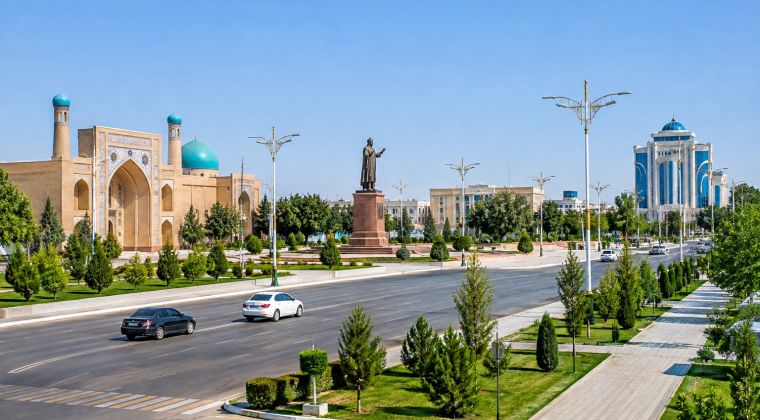
Discover Uzbekistan — a land of ancient civilizations, legendary cities of the Great Silk Road, boundless deserts and distinctive traditions. This journey brings together the many different facets of Central Asia: from the mysterious archaeological monuments of Khorezm and the extraordinary landscapes of the former Aral Sea to the majestic architecture of Bukhara and Samarkand.
Themes: Cultural, Historical, Archaelogical, Adventure, Gastronomical tours,
Discover Uzbekistan — a land of ancient civilizations, legendary cities of the Great Silk Road, boundless deserts and distinctive traditions. This journey brings together the many different facets of Central Asia: from the mysterious archaeological monuments of Khorezm and the extraordinary landscapes of the former Aral Sea to the majestic architecture of Bukhara and Samarkand.
You can look forward to meetings with local craftsmen, an introduction to the traditional way of life, nights in authentic desert yurts, culinary discoveries and walks through historic quarters where the East still preserves its unique charm.
The itinerary will let you not just see the main sights of Uzbekistan, but also feel the atmosphere of the country and get to know its culture, history and hospitality.
Upon arrival at Urgench International Airport you will be met by a driver with a name sign. After the introductions and a brief organizational part, you will set off for Nukus, the capital of the Republic of Karakalpakstan. The drive takes about three hours and lets you gradually get acquainted with the landscapes of western Uzbekistan.
Upon arrival, check-in at the hotel, with the possibility of early check-in and rest after the flight.
After breakfast you will visit the Igor Savitsky State Art Museum, one of the most unusual museums in Central Asia. Its collection has gained worldwide fame thanks to its unique collection of Russian avant-garde and Soviet art of the 20th century. It presents works by artists whose creative work long remained outside official recognition.
Besides painting, sculpture and decorative and applied arts, the museum holds a rich collection of items of the traditional culture of the Karakalpak people. It is a great opportunity to become acquainted at once with the artistic heritage of different eras and the distinctive traditions of the region.
The tour is conducted with an English-speaking guide.
After visiting the museum, return to the hotel. The remaining time can be devoted to rest and independently exploring the city.
Overnight at a hotel in Nukus.
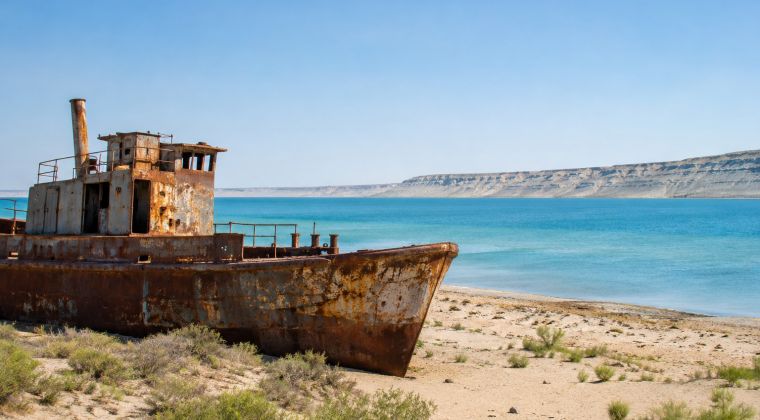
After breakfast, departure for Muynak, a town that was once one of the important fishing ports of the Aral Sea. Today it has become a symbol of one of the greatest ecological disasters of modern times and a place that shows how greatly a natural landscape can change in just a few decades.
The main stop on the route will be the famous Ship Graveyard. Where the sea surface once lay, a desert expanse now stretches, with the hulls of old fishing vessels rising from it. The ships abandoned on the sand recall the town's former life and the dramatic shrinking of the Aral Sea. This place makes a strong impression and offers a new perspective on the interaction between humans and nature.
Then you will visit the Muynak local history museum. Its exhibition tells about the town's past, the development of fishing, the life of local residents and the changes that occurred after the sea receded. Historical photographs, household items, fishing equipment and archival materials help reconstruct a picture of the region's former life.
The museum visit will be complemented by a short documentary about the history of the Aral Sea and the fate of Muynak.
After a full excursion, return to Nukus. Upon arrival, check-in at the hotel and rest.
Overnight at a hotel in Nukus.
After breakfast and check-out, departure for Khiva. The drive takes about 3.5 hours. Upon arrival you will meet your guide and get acquainted with one of the most impressive historic cities of Uzbekistan.
The sightseeing program will begin with Ichan-Kala, the old inner city surrounded by mighty fortress walls. This historic complex is included in the UNESCO World Heritage List and is a true open-air architectural ensemble. Narrow streets, clay walls, blue domes and tall minarets create the feeling of traveling back in time.
During the walk you will see the Ata-Darvaza gate, the famous Kalta-Minor minaret, which stands out for its unusual shape and bright turquoise tiling, and the Muhammad Amin Khan madrasa, one of the largest historic educational institutions in the city.
The route will continue with the Kunya-Ark fortress, the former residence of the rulers of the Khivan Khanate. Behind its walls were administrative rooms, a mosque, palace halls and inner courtyards. You will also get acquainted with the madrasa of Muhammad Rahim Khan II, known not only as a ruler but also as a poet who wrote under the name Feruz.
A special place in the program is occupied by a visit to a carpet workshop created with the support of Operation Mercy and UNESCO. Here local women craftsmen continue to preserve the traditions of handmade carpet weaving, passing the secrets of the craft on to the next generations. You will be able to watch the work at the looms, learn about the specifics of making national carpets and try taking part in the process yourself.
Next, the tour will continue at the mausoleum of Pahlavan Mahmud, one of the most revered spiritual places in Khiva. You will see the Islam Khoja madrasa and minaret, as well as the Juma Mosque, known for its unusual interior with numerous wooden columns, each of which has its own decorative look.
The next stop is the Tash-Hauli palace, the luxurious residence of the Khivan khans with artfully decorated inner courtyards, halls and a harem. The architectural ensemble lets you imagine what palace life of Eastern rulers was like.
The program also includes the madrasa and caravanserai of Allakuli Khan and the Said Niyaz Shalikar mosque.
The cultural part of the day will conclude with a visit to the Silk Museum. Here you will get acquainted with traditional methods of processing and dyeing silk threads and will be able to try dyeing fabric yourself.
After the tour, free time for rest and walks around the old city.
During today's introduction to Khiva, the guide will also tell you about the archaeological fortresses of ancient Khorezm, which are planned for an independent visit the next day with a driver.
Overnight at a hotel in Khiva.
After breakfast you will set off to meet yet another remarkable page of Central Asian history. Today's route passes through the desert expanses of the Kyzylkum, where the remains of ancient Khorezmian settlements have survived amid sands and open plains.
Accompanied by a driver, you will visit the archaeological complexes of Ayaz-Kala and Toprak-Kala. The road to these monuments is about 100 km one way and takes approximately two hours.
The first site will be Ayaz-Kala, a complex of ancient fortifications located on desert heights. The remains of powerful defensive walls and towers make it possible to imagine how important a role such fortifications played in protecting the settlements and trade routes of ancient Khorezm.
Then a visit to Toprak-Kala, one of the most significant archaeological monuments of the region. In the 3rd century AD the city was an important political and administrative center of ancient Khorezm. Fragments of fortress walls and residential buildings have survived here, testifying to the high level of development of the ancient civilization.
A walk among the ruins will let you touch a history that existed long before the spread of Islam in the region and see what ancient cities located at the crossroads of trade and cultural routes looked like.
After visiting the fortresses you will head to Bukhara. The journey is about 450 km and will take approximately 6–7 hours. Stops are planned along the way for rest and for getting acquainted with the surrounding landscapes of the Kyzylkum desert.
Upon arrival, check-in at the hotel. You can spend the evening in a relaxed atmosphere after the long drive.
Overnight at a hotel in Bukhara.
After breakfast, your acquaintance with Bukhara begins — an ancient city that for many centuries was one of the most important centers of science, trade, religion and culture of the East. Thanks to its well-preserved historical structures, Bukhara seems to transport guests to the era of caravans, great rulers and famous scholars.
The first stop will be the Chashma-Ayub mausoleum, known as the spring of the holy Job. A legend is connected with this place about the prophet who, according to tradition, struck the ground with his staff, after which a spring of clear water gushed forth from it.
Next you will visit the mausoleum of Ismail Samani, a unique architectural monument of the 10th century. Its brickwork forms complex geometric patterns, thanks to which the building is considered one of the outstanding examples of early Islamic architecture in Central Asia.
Then the route will lead you to the Bolo-Hauz mosque, recognizable by its graceful wooden columns reflected in the water of the pond located next to it.
The next site is the Ark fortress, an ancient citadel that served as the residence of the Bukharan rulers. Behind its massive walls there once stood palace rooms, administrative buildings and various utility structures. Today it is one of the main historical symbols of the city.
Continuing the walk, you will find yourself at the Lyabi-Hauz ensemble, a cozy square with a pond, surrounded by historic madrasas and old buildings. For centuries this place remained the center of city life, where merchants, craftsmen and travelers gathered.
Special attention will be paid to Bukhara's old trading domes: Toki Telpak-Furushon, Toki Zargaron and Toki Sarafon. In the past, under their vaults were located workshops and shops of jewelers and of merchants of fabrics and other Eastern goods. You will also visit the Magoki-Attori mosque, whose history is connected with ancient religious structures that existed on this site even before the spread of Islam.
In the middle of the day, not just a lunch awaits you, but a real gastronomic introduction to Uzbekistan. As a guest of a local family, you will take part in a master class on preparing traditional Uzbek plov. You will learn about the specifics of choosing ingredients, the sequence of preparation and the secrets of the national dish.
In the second half of the day, a visit to the Poi-Kalyan ensemble, one of the most recognizable architectural complexes of Bukhara. Its main dominant feature is the majestic Kalyan minaret, rising above the historic part of the city. Nearby are the Kalyan mosque and the Mir-i-Arab madrasa, known for its spiritual history and architectural splendor.
The sightseeing program will be completed by the madrasas of Ulugbek and Abdulaziz Khan, monuments reflecting the development of the educational and architectural culture of the medieval East.
Return to the hotel and free time.
Overnight at a hotel in Bukhara.
After breakfast, the exploration of the Bukhara region continues. Today's tour will be devoted to spiritual traditions, the history of Sufism and the luxurious architecture of the country residences of the Bukharan rulers.
The first stop on the route will be the Chor-Bakr necropolis, located outside the old city. This historic complex, also known as the “City of the Dead,” is an extensive ensemble of mausoleums, mosques and religious structures. Its history is closely connected with representatives of the influential spiritual family of the Juybari sheikhs. Today Chor-Bakr is an important place of pilgrimage and has great historical and architectural value.
Next you will go to the memorial complex of Bahauddin Naqshband, one of the best-known spiritual teachers of the Islamic world and the founder of the Naqshbandi Sufi order. This place has special significance for believers and pilgrims who come here from different countries. On the territory of the complex are the sheikh's mausoleum, a mosque, a madrasa and other historic structures. During your visit you will become familiar with the basic principles of the Naqshbandi spiritual teaching and its influence on the religious life of the region.
The next stop will be the Sitorai Mohi-Hosa palace, the summer residence of the last Bukharan emirs. The name of the palace translates as “The Palace Where the Moon Meets the Stars.” This place is especially interesting for its combination of traditional Eastern architecture and European architectural elements.
The interior of the palace amazes with its exquisite finishing, mirrored halls, carved details, decorative painting and unusual interior items. The gardens and fountains surrounding the palace create the atmosphere of a secluded country residence where the ruling elite of the Bukharan Emirate once relaxed.
After the tour, return to the city. The remaining time can be devoted to independent walks, visits to souvenir shops and craft workshops. Bukhara is famous for its ceramics, traditional fabrics, embroidery and jewelry, many of which are made using old technologies.
In the evening you will get acquainted with national art at a folklore performance held in a historic madrasa. Music, dances and traditional costumes will let you feel the atmosphere of an Eastern celebration and see the cultural heritage of Uzbekistan performed live.
Overnight at a hotel in Bukhara.
After breakfast you will leave Bukhara and set off on a journey through lesser-known but no less interesting corners of Uzbekistan. Today you can look forward to an introduction to traditional crafts, ancient monuments and the nature of the desert region.
The first stop will be Gijduvan, a small town that has become widely known thanks to its ceramic school. Local masters have for many generations preserved a special technique of making and painting ceramics, thanks to which Gijduvan products are distinguished by recognizable ornaments and rich colors.
You will visit the workshop of the hereditary potters of the Narzullaev family. During the tour you will become acquainted with the process of creating ceramic items: from preparing the clay to shaping, firing and applying decorative patterns. It is a great opportunity to see the work of real masters and learn how ancient craft traditions are preserved.
Next the journey continues to Nurata, a historic town located at the foot of the Nuratau ridge. One of the main sights will be the ancient fortress of Alexander the Great, also known as the Nur fortress. It is believed that the fortification is connected with the campaigns of Alexander the Great in Central Asia and performed an important defensive function.
Then you will visit the Chashma complex, one of the best-known sacred places of the region. Its center is a natural spring that is considered revered among local residents and pilgrims. Numerous legends are connected with this place, and the water of the spring has long been surrounded by special reverence.
In the second half of the day, departure for a yurt camp located not far from Lake Aydarkul, amid the boundless sandy expanses of the Kyzylkum. The drive will take about 3–4 hours (approximately 240 km).
As you move away from populated areas, completely different landscapes will open before you: desert plains, sand dunes and wide horizons. Here the scale of nature and the calm of the surrounding world are felt especially keenly.
Upon arrival, accommodation in traditional yurts — the national dwellings of nomadic peoples, adapted to life in desert conditions.
In the evening an introduction to nomadic culture awaits you: preparing national dishes during a culinary master class, socializing by the campfire and the chance to learn more about the traditions and daily life of the people of desert regions.
The organization of the stay involves a careful attitude toward the natural environment and the principles of ecological tourism.
Overnight at a traditional yurt camp.
On this day the tour support is provided by English-speaking guides.
After breakfast, the journey continues through the natural corners of Uzbekistan. The morning will begin with a trip to Lake Aydarkul, one of the largest bodies of water in the region, which unexpectedly appears amid the arid landscapes of the Kyzylkum desert.
Departure from the yurt camp. For those who wish to admire the first rays of the sun over the desert, there is the option to set out earlier and greet the sunrise in nature.
At the lake you will be able to enjoy picturesque scenery, the calm of the water surface and the contrast between the desert expanses and the blue surface of the water. If you wish, you can complement your impressions with a camel ride across the sand dunes. Such a trip will let you feel like a participant in an old caravan route and get acquainted with the traditional means of transport of nomads.
After getting acquainted with the lake, departure for the village of Ukhum. The distance is about 130 km, and the travel time is approximately an hour and a half.
Ukhum is a small mountain settlement that has preserved the traditional rural way of life. Here you will stay at the guesthouse of a local family, where you can get acquainted with the daily life of residents of mountain areas and feel genuine Uzbek hospitality.
After resting, a walking excursion is planned in the natural area of the Nuratau Nature Reserve. A route of about an hour will lead you to ancient petroglyphs — rock drawings left by people many centuries ago. These drawings are of particular interest to researchers and travelers, as they allow you to touch the history of the region's ancient inhabitants.
Along the way you will be able to admire mountain landscapes, see the local vegetation and become acquainted with the natural diversity of this part of Uzbekistan.
On returning to the guesthouse, a traditional dinner awaits you, prepared by the hosts from fresh local products. It is an opportunity not only to taste home cooking but also to get closer to the daily life of the rural community.
On this day the tour support is provided by English-speaking guides.
Overnight at the guesthouse.
After breakfast, the morning will be devoted to a leisurely acquaintance with the village of Ukhum and the natural landscapes surrounding it.
Unlike the busy sightseeing days, today's route allows more time for rest and for observing local life. You will be able to stroll along the village streets, see traditional houses, get acquainted with the daily occupations of the residents and enjoy the silence of the mountain region.
Here the difference is especially noticeable between the noisy historic centers and small settlements, where life is still governed by natural rhythms and centuries-old customs.
After getting acquainted with the surroundings you will head to Samarkand, one of the most famous cities of Central Asia, whose history is closely connected with the Great Silk Road and the era of great conquerors and scholars.
The journey will be about 160 km and will take approximately 3–4 hours.
Upon arrival, check-in at the hotel and free time for rest. If time permits, we recommend an evening walk to Registan Square. In the evening illumination the majestic madrasas take on a completely special look, and the architectural details look even more expressive.
Overnight at a hotel in Samarkand.
After breakfast, a full excursion awaits you through the historic center of Samarkand, a city that for centuries was the most important center of trade, science, art and culture of the East.
The introduction to the city will begin with Registan Square, the main architectural calling card of Samarkand. Its name translates as “sandy place.” In the past the square served as the center of public life, where trading events, gatherings and important city events took place.
Today it is surrounded by three monumental madrasas that form one of the most recognizable architectural ensembles in the world.
You will see the Ulugbek madrasa, built in the 15th century during the reign of the famous scholar and astronomer Mirzo Ulugbek. The other two structures — the Sherdor and Tilla-Kari madrasas — were built in the 17th century. Their facades are decorated with complex mosaic compositions, ornaments and exquisite calligraphy. The monumental portals and the rich interior decoration of the buildings attract particular attention.
The next stop will be the Gur-Emir mausoleum, the resting place of Amir Timur and members of his dynasty. The majestic dome, elegant decorative elements and rich interior decoration make this monument one of the finest examples of Timurid architecture. The historical significance of the mausoleum extends far beyond Uzbekistan: its architectural solutions influenced the construction of many well-known structures of the Islamic world.
Next you will go to the Bibi-Khanum mosque, a grand architectural structure of the 15th century, built by order of Amir Timur. It was once considered one of the largest mosques of the Islamic world and demonstrated the power of the Timurid state.
Nearby is the Siab Bazaar, a lively trading space where the traditional atmosphere of an Eastern market is preserved. Here you can get acquainted with local products, taste the famous Samarkand flatbreads, and buy dried fruits, nuts, sweets and aromatic spices.
In the second half of the day, a visit to the Shah-i-Zinda complex, a unique ensemble of mausoleums of the 14th–15th centuries. Its narrow passages and architectural structures, decorated with blue ceramics, majolica and mosaics, create a unique atmosphere. The complex is considered one of the most expressive monuments of medieval architecture in the region.
To conclude the day, an introduction awaits you to one of the best-known culinary traditions of Samarkand — the making of national bread. During a special master class you will learn about the specifics of kneading the dough, traditional ways of shaping flatbreads and baking them in a tandoor.
After the tour, return to the hotel. Free time.
Overnight at a hotel in Samarkand.
Today is devoted to the lesser-known but no less significant historical and cultural sights of Samarkand. After breakfast you will continue getting to know the heritage of the ancient city, and in the evening you will head to the capital of Uzbekistan.
The first stop will be the Afrasiab archaeological museum, located on the territory of the ancient settlement. It was here that one of the early centers of Samarkand stood, existing long before the Mongol invasion.
The museum holds valuable archaeological finds, household items, historical artifacts and the famous frescoes of the 7th century. Of particular interest are the wall paintings, reflecting diplomatic ties, court life and the cultural traditions of the ancient state.
Then a visit to the Hazrati Doniyor mausoleum, a place considered sacred at once to representatives of several religious traditions. Legends about the Prophet Daniel are connected with this monument, and the mausoleum itself has for many years remained a place of pilgrimage for Muslims, Christians and Jews.
Next you will go to the village of Konigil, where the “Meros” workshop is located, known for reviving old technologies for producing Samarkand paper and silk.
Here you will be able to see the entire process of making paper from natural plant raw materials, become acquainted with traditional tools and learn how the masters revive technologies used centuries ago. The workshop also introduces visitors to silk processing and other old crafts.
The next site will be the Ulugbek Observatory, one of the most important scientific monuments of the medieval East. It was founded in the 15th century by the outstanding ruler, mathematician and astronomer Mirzo Ulugbek. Thanks to the observations carried out here, a star catalog was compiled that was highly accurate for its time.
A visit to the observatory will let you learn more about the scientific achievements of Central Asia and the role Samarkand played in the development of world astronomy.
After the end of the sightseeing program, transfer to the railway station and departure for Tashkent on the high-speed “Afrosiyob” train. The travel time is about 2.5 hours.
Upon arrival in the capital, transfer to the hotel and check-in.
Overnight at a hotel in Tashkent.
After breakfast, a sightseeing tour of Tashkent awaits you — the multifaceted capital of Uzbekistan, where ancient monuments coexist with modern architecture, wide avenues and green city parks.
The introduction to the city will begin with its historic part — the Old City, which has preserved the traditional atmosphere of an Eastern settlement. Here you will visit the Hast-Imam architectural and religious complex, which has special significance for the Muslim culture of the country.
On the territory of the complex are the Tilla-Sheikh mosque, the Barak Khan madrasa and the Muyi Mubarak library, where the famous manuscript of the Uthman Quran is kept. This ancient manuscript is considered one of the most important Islamic relics and attracts the attention of researchers and pilgrims from all over the world.
Next, a visit to the Center of Islamic Civilization is planned — a large-scale cultural and educational space dedicated to the history, science and spiritual heritage of the Islamic world. During the general tour you will learn more about the famous Uthman Quran, its historical significance and its place in the Islamic tradition. According to tradition, traces of the blood of Caliph Uthman have been preserved on the pages of the manuscript.
The next stop is the Chorsu bazaar, one of the best-known and most colorful markets in Tashkent. It is easy to recognize by its huge green dome, under which are trading rows with national products, spices, dried fruits, nuts, sweets and fresh baked goods.
A walk through the market will let you feel the true rhythm of the Eastern capital, get acquainted with culinary traditions and observe the daily life of local residents. If you wish, you can try traditional dishes of Uzbek cuisine here.
Then a ride on the Tashkent metro awaits you, which has long become an attraction of the city in its own right. Each station has its own artistic design: marble columns, decorative panels, original chandeliers and national ornaments turn an ordinary ride into a small architectural tour.
In the second half of the day you will get acquainted with the modern part of the capital. During a sightseeing walk along the main squares and avenues of the city you will see:
The final point of the tour will be the Museum of Applied Arts, located in a beautiful historic building. Its collection introduces visitors to the richness of Uzbekistan's national decorative and applied arts.
The museum's halls present traditional embroidered fabrics, carpets, ceramic items, jewelry, woodcarving items and national musical instruments. The exhibition demonstrates the diversity of regional craft schools and the skill of Uzbek artists and craftsmen.
After the tour, transfer to the hotel and check-in. The remaining time can be devoted to rest, independent walks or buying souvenirs.
Overnight at a hotel in Tashkent.
If necessary, on this day an additional transfer to the airport can be arranged for a Turkish Airlines (TK) flight at 02:20.
Breakfast.
Depending on the departure time and the schedule of the international flight, a transfer will be arranged from the hotel to Tashkent International Airport.
End of the journey through Uzbekistan. You will take home not only photographs of majestic architectural monuments, boundless deserts and ancient cities, but also vivid impressions of getting to know the culture, history, traditions and hospitality of this remarkable country.
End of the tour. Until we meet again in Central Asia!


